Environmental Initiatives
BIRDING INITIATIVES
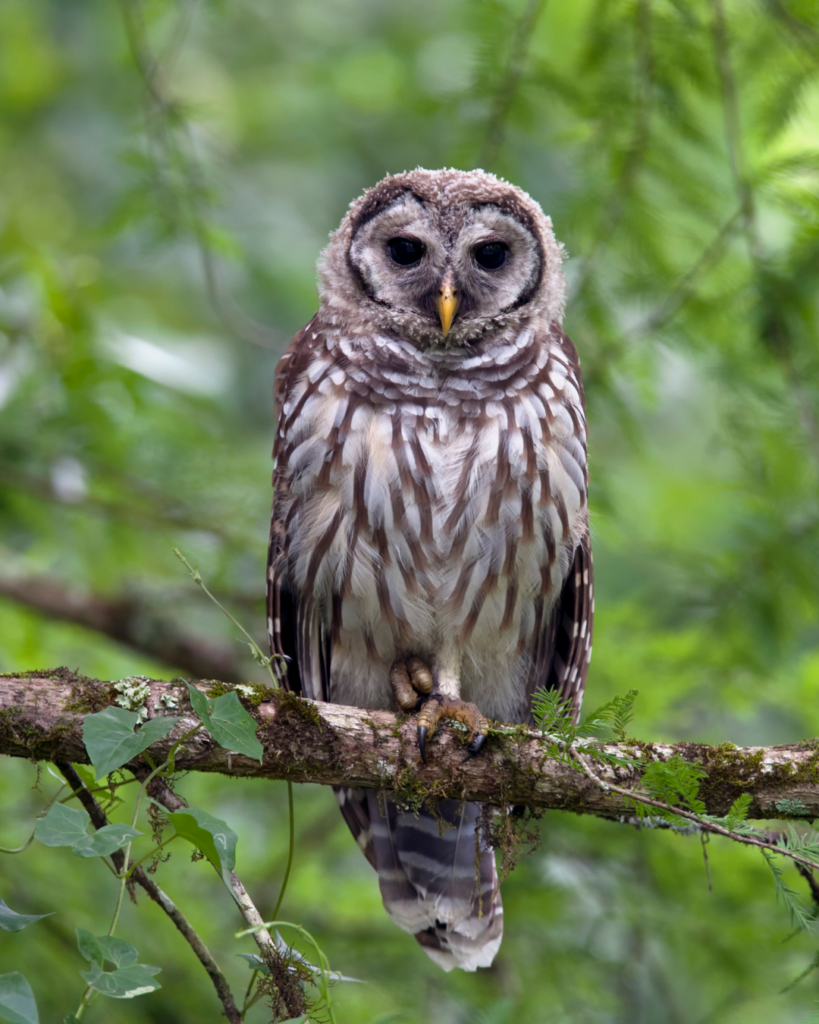
One of the great joys of spending time at New Pond Farm is observing the wide variety of avian species that share our pastures and woodlands. Thanks to an enthusiastic team of birders, led by Joe Bear, we now have an extensive birding checklist with over 150 species that have been spotted on the property throughout the seasons.
American Kestrel
Back in the 1980s, a pair of kestrels nested reliably in a box positioned in a tree along our Farm Road. These exquisite, robin-sized, falcons were an absolute joy to behold as they would soar, hover, and plunge over the pastures searching for insects, small mammals, amphibians, and reptiles.
For many years we have been without a nesting pair, and for the past several decades DEEP has listed them as a species of special concern.
Working with Art Gingert, who is well known in the State for his decades of devotion to reestablishing nesting pairs of kestrels, we have installed a kestrel box on the eastern side of our pasture. No takers yet, but the box will be back up early in the spring, and we are hopeful.
Purple Martin
Another bird that DEEP considers a species of special concern is the Purple Martin. Once commonly seen flying over open agricultural lands across the State, these aerial acrobats have been in decline for decades due to lack of open fields and pastures, lack of suitable nesting sites, and competition from aggressive non-native European starlings and house sparrows
For several decades, conservation efforts have been in place across the State to bring back the Purple Martins, and efforts are paying off! Arrangements of specially-sized, artificial hollow gourds have been hung from tall poles in appropriate habitats. Groups like the CT Audubon Society have well established banding programs, and DEEP reports that the Martin populations are on the rise.
New Pond Farm’s pastures seem like a perfect habitat, so during the nesting season, we too have positioned an arrangement of hanging gourds near the white fence line along the pasture. If you venture over here during the early morning hours in the spring, you may hear the loop of pre-recorded twittering calls that we play in an attempt to attract any migrants. So far, we have just attracted a few scouting birds. Hopefully 2025 may be our lucky year.
Eastern Bluebirds
An Avian Success Story: In the early 1900s European Starlings and English Sparrows were introduced into the northeast. For decades, these aggressive cavity nesters out-competed the more docile bluebirds for nest sites, so their populations were in serious decline. Environmental groups and individuals came to the rescue. Wooden nesting boxes were installed throughout the area and thankfully the Bluebirds proved to be quite adaptable, successfully raising their families in these new homes.
As you walk through our lower pastures and wildflower meadow, you may be fortunate enough to see bluebirds sitting on our nesting boxes. The males have brilliant blue plumage on their wings and back, a rusty colored breast and sides, and white undersides. The wings and back of the females are a more subtle grayish blue.
Once you learn the warbling vocalizations of these members of the thrush family, you will hear them frequently throughout your walk.
In addition to the many insects that make up their summer diet, our bluebirds feast on the berries of native shrubs throughout the fall and winter. We have planted stands of native winterberries (Ilex verticillate) and flowering dogwoods (Cornus florida) to add to our native staghorn sumacs (Rhus typina), and elderberries (Sambucus nigra).
PARTNERSHIP WITH THE REDDING LAND TRUST
One of the great joys of spending time at New Pond Farm is observing the wide variety of avian species that share our pastures and woodlands. Thanks to an enthusiastic team of birders, led by Joe Bear, we now have an extensive birding checklist with over 150 species that have been spotted on the property throughout the seasons.
Carmen believed “small is beautiful,” and so do we. We make the most of our 102 acres by balancing our livestock, pastures, and gardens. During the growing season, chickens free-range within alternate “yards,” cows rotationally-graze in the pastures beyond the barnyard, and sheep browse their moving enclosure on Astronomy Hill. Through our careful land management and our programs, we are inspiring a new generation of environmental stewards.
We are grateful for Carmen’s foresight and to have a strong working relationship with the Redding Land Trust.
WOODLANDS
Explore Our Trails!
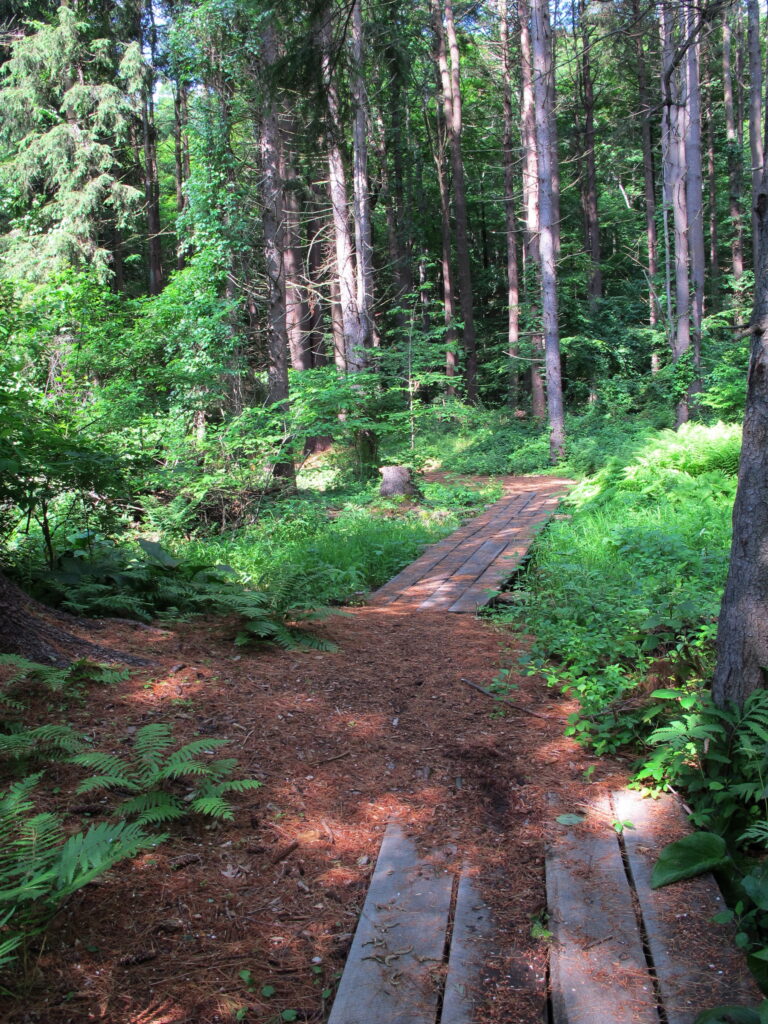
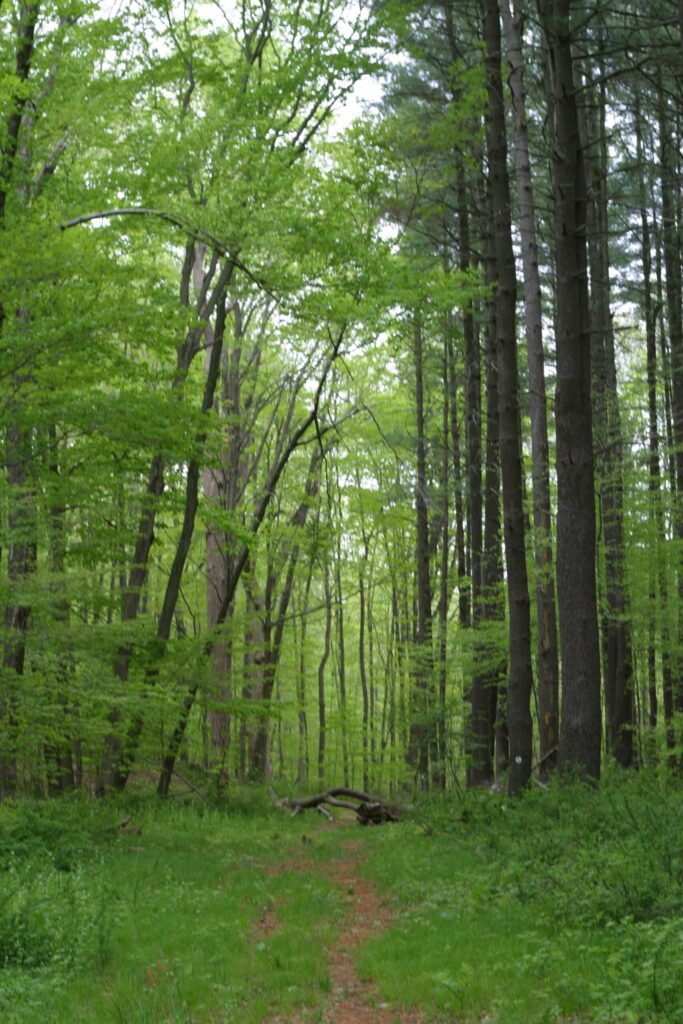
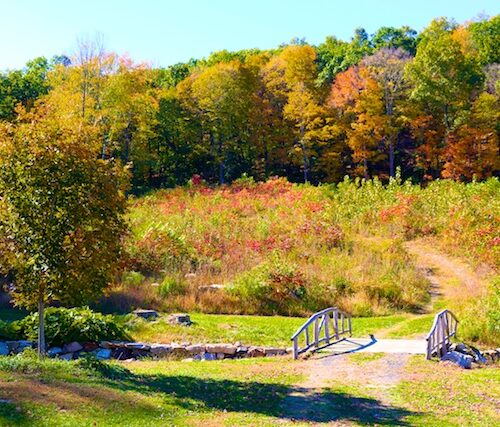
Members of New Pond Farm Education Center are welcome to enjoy 2.5 miles of trails across 75 acres of open woodlands.
Just past the Learning Center, the trail winds through a 5-acre “scrub and shrub” area. Once a towering white pine woodland planted in the 1920s, it was toppled by a microburst during Super Storm Sandy in 2012. Since then, nature has taken over, creating a dynamic habitat where early successional plants like dock, pokeweed, and lupine have given way to tulip, birch, and pine. Today, this area serves as a vital food source for both resident and migrating songbirds.
Wildlife Along the Trails
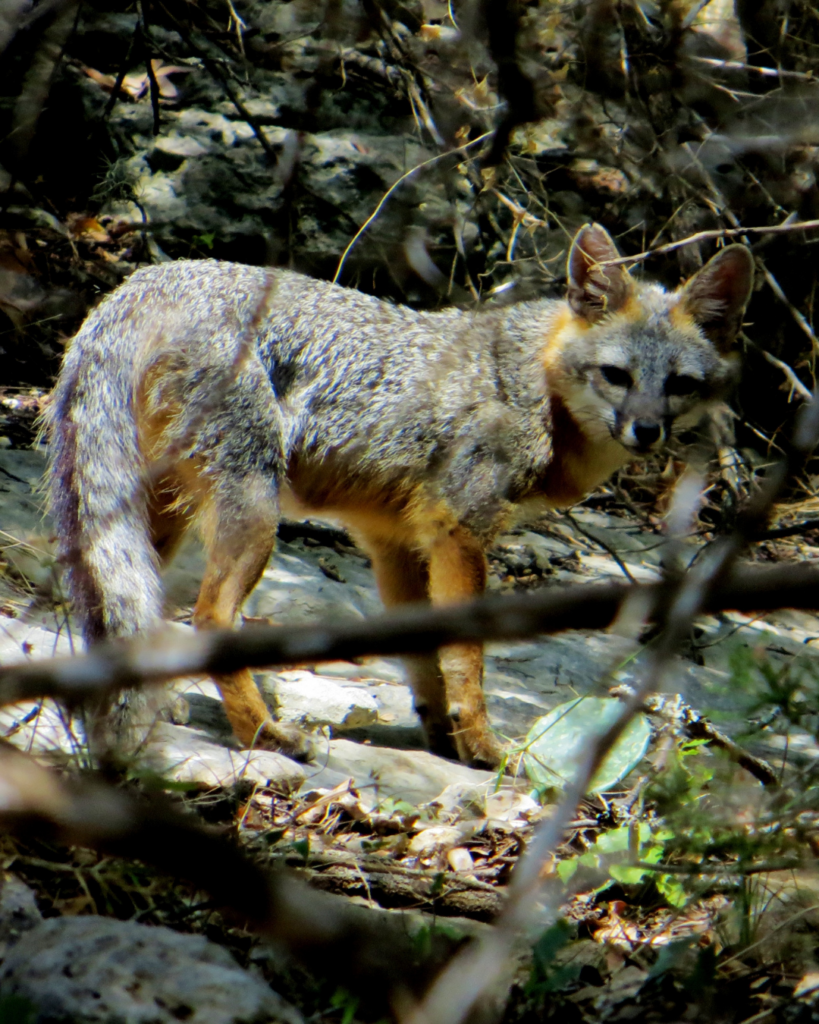
Our property connects to Hoyt Scout Preserve, Aquarion Water Company land, and Redding Land Trust lands, creating a large corridor of uninterrupted open space that shelters abundant native wildlife. Along the trails, you might spot or find signs of red and gray foxes, bobcats, fisher cats, weasels, cottontails, and a variety of squirrels. If you discover anything interesting while hiking, our staff would love to hear about it!
OUR WETLANDS
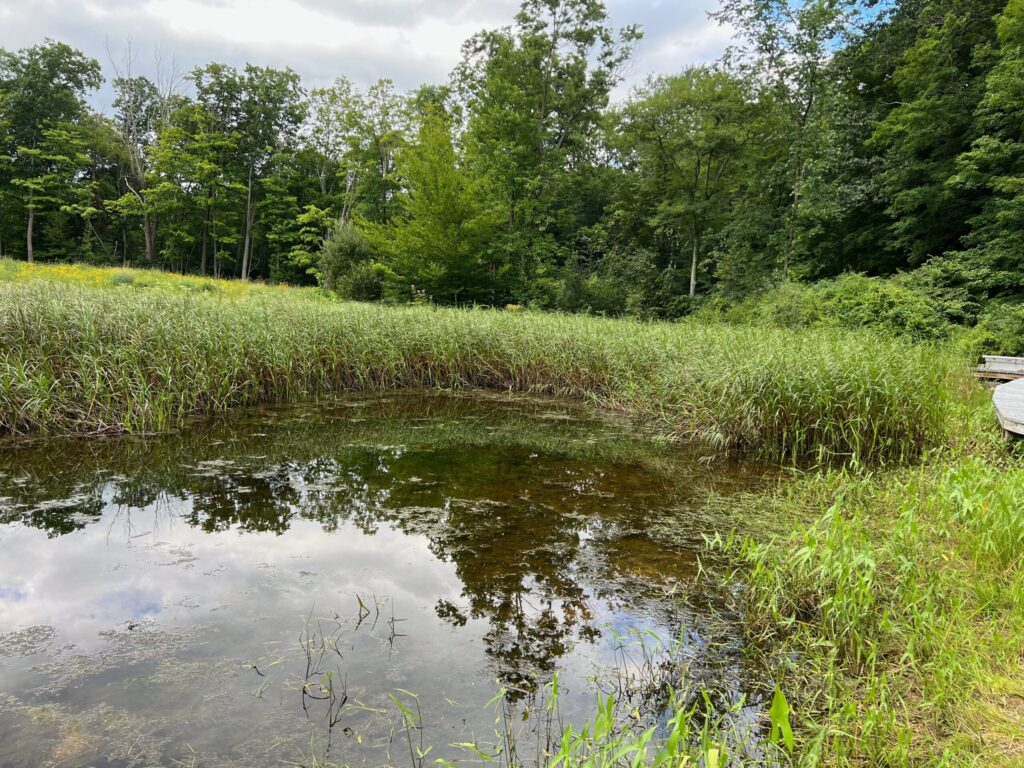
A BIT OF OUR WETLANDS HISTORY
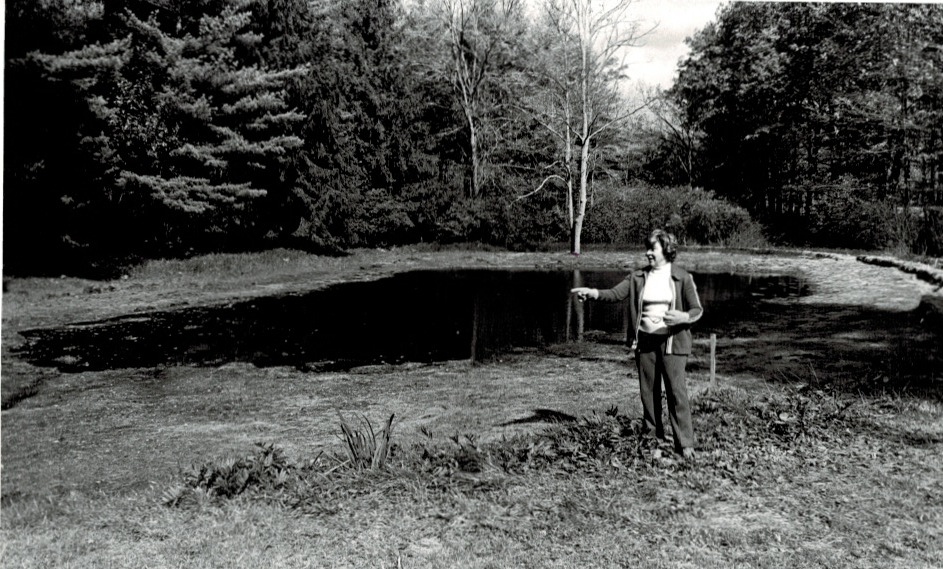
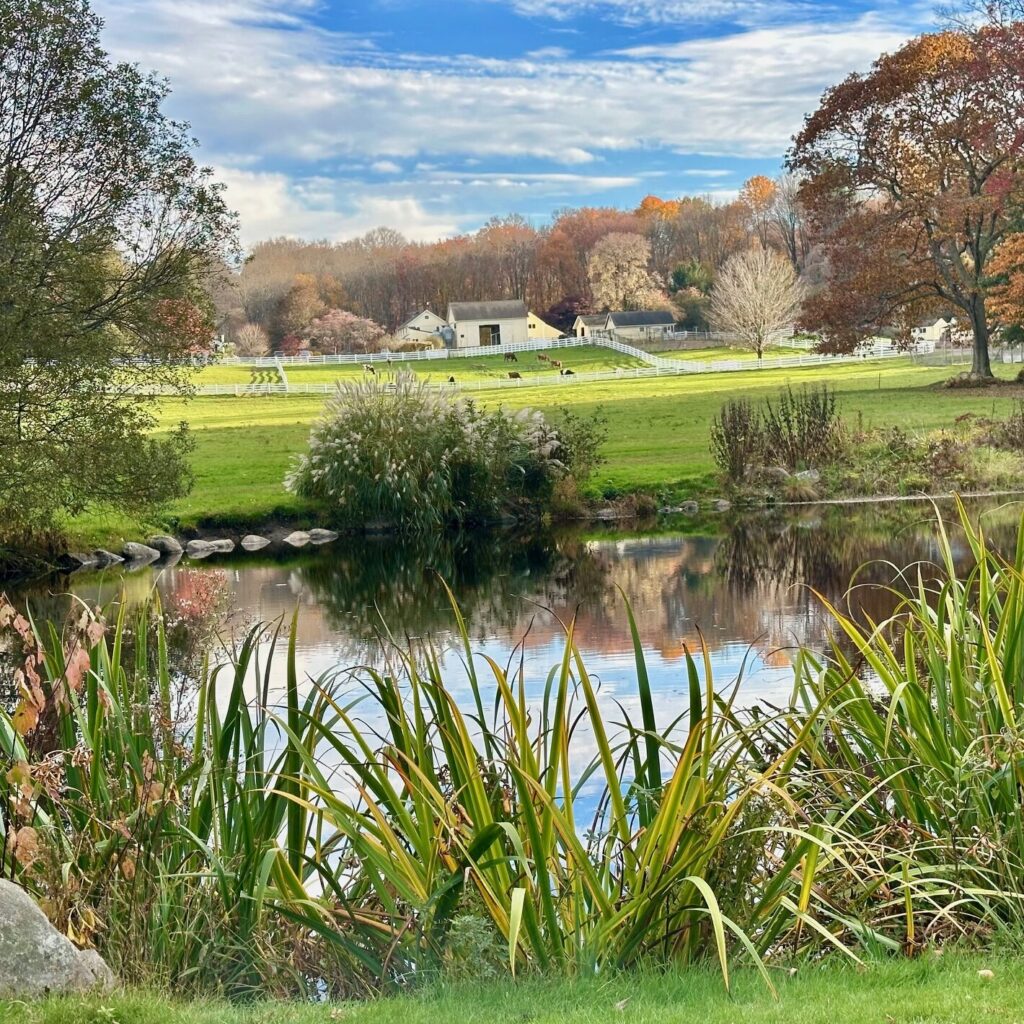
More than fifty years ago, our founder, Carmen Mathews, transformed a wooded swamp into a vibrant wetland system—New Pond and an adjoining marsh—designed to support wildlife diversity and serve as outdoor classrooms.
Over time, increasingly severe storms damaged the infrastructure that regulated water levels, disrupting the flow of water from the pond to the marsh. As a result, the marsh had begun to dry out and become overtaken by invasive vegetation.
The loss of the mature white pine grove during Superstorm Sandy further stressed this fragile ecosystem, exposing it to full sun and threatening amphibian species that once thrived there. Today, restoration efforts are focused on reviving this vital habitat and ensuring its resilience for future generations.
PHASE I IS COMPLETE!
- Our pond has been cleaned and reconfigured to its original depth
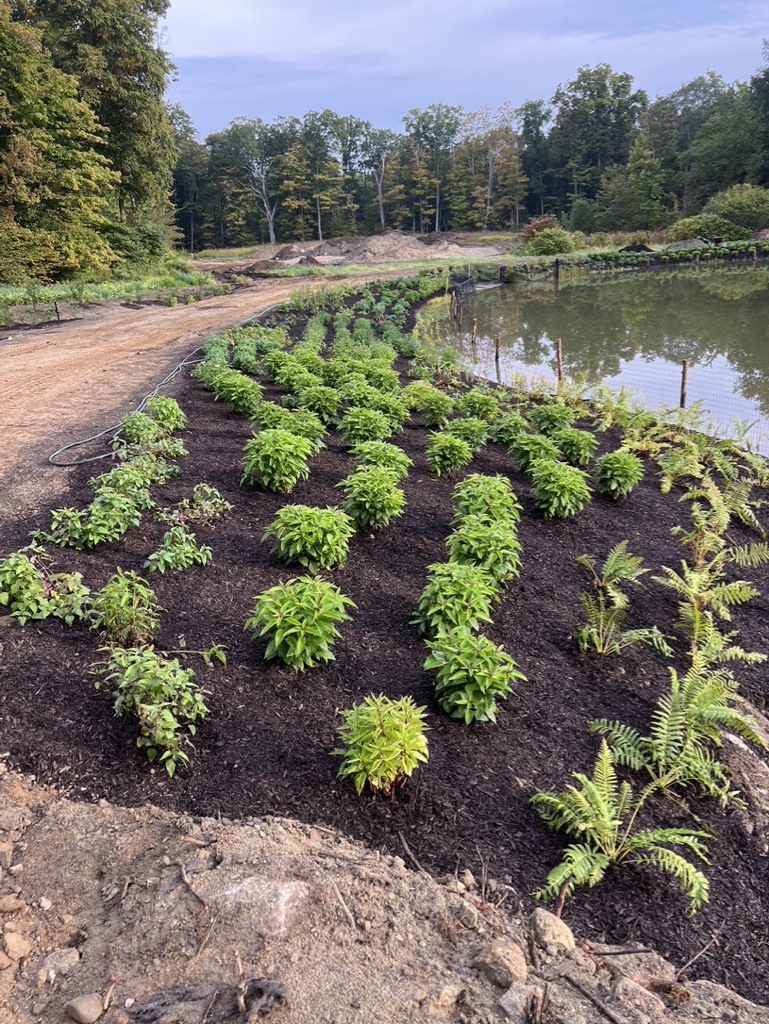
- Three vernal pools have been created to the west of the pond, where amphibians will benefit from the shade of our hillside
- Over a thousand native plantings now surround these areas. Discreet fencing has been installed to discourage our visiting flocks of geese from their usual “march through the gardens”
- A collection basin has been created at the southern end of the pond which is designed to trap the sediment that makes its way down the stream in times of high water. This can be “cleaned” as needed, and it will extend the life of the pond
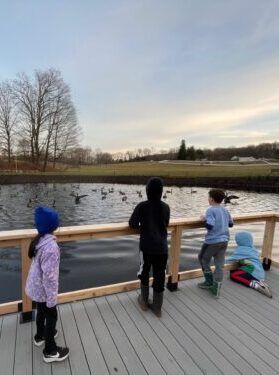
- An accessible teaching platform is ready for our student explorers and our members to enjoy
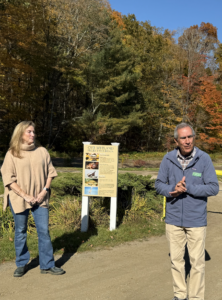
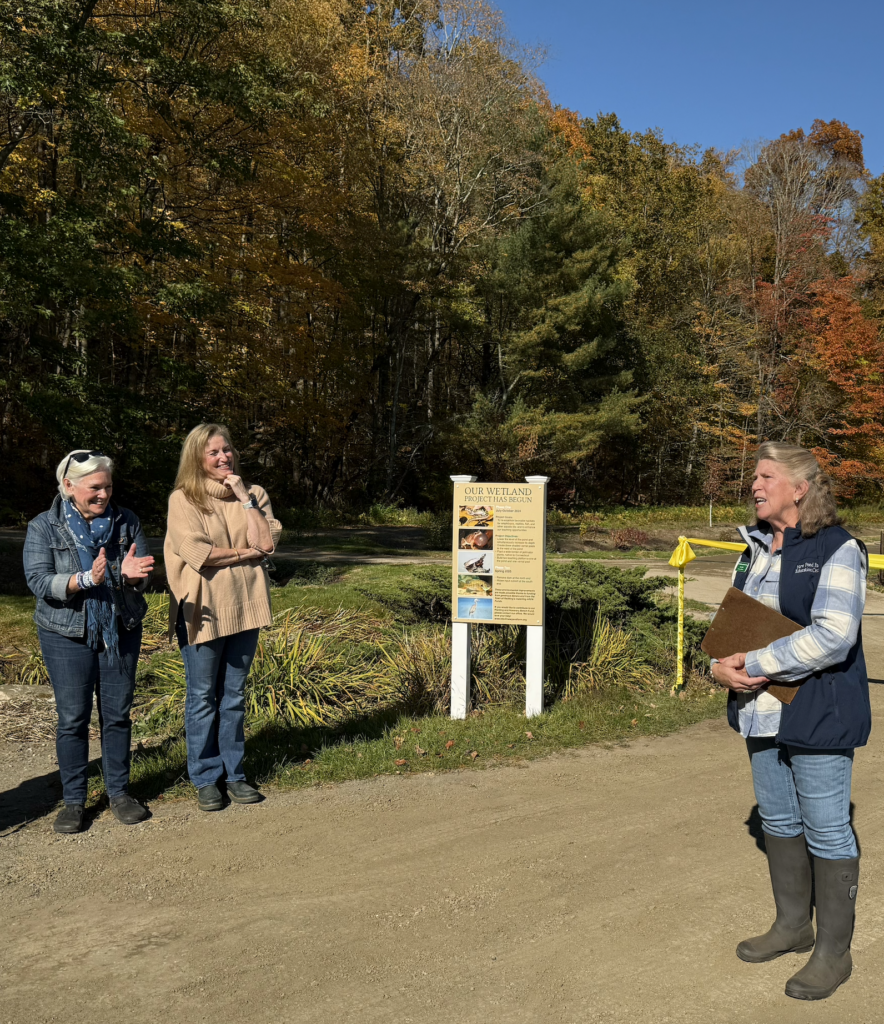
Exciting progress has been made, thanks to generous funds and a hardworking team from Nazzaro, Inc., Stonebridge Associates, and LandTech–along with members of our staff and board.
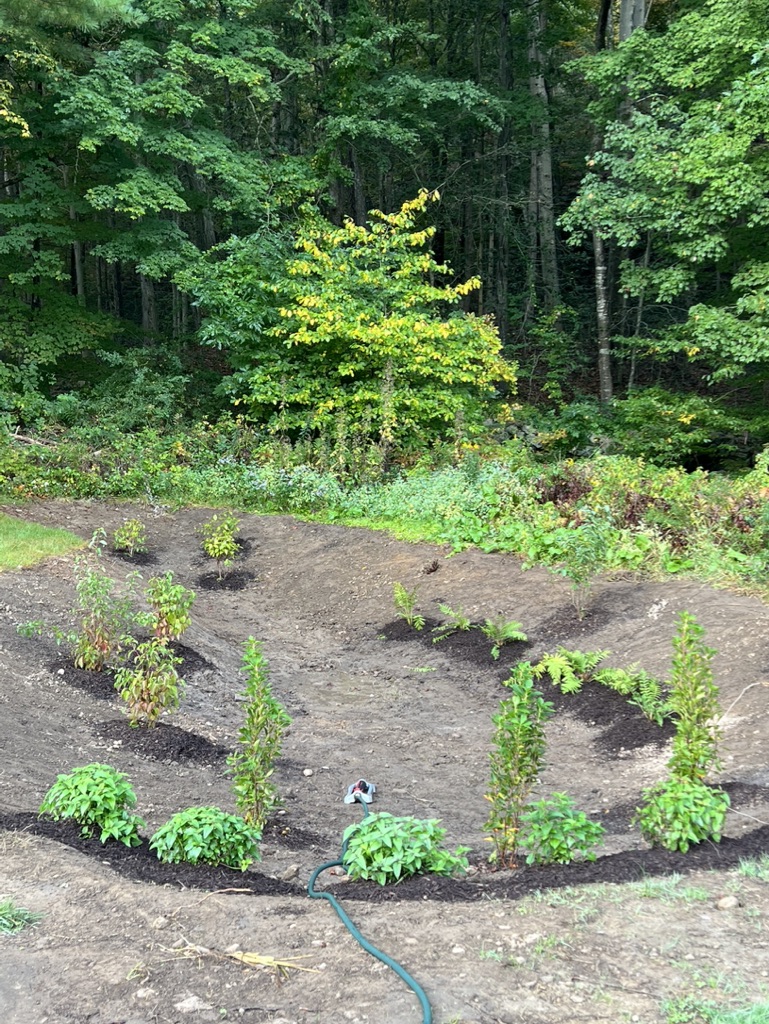
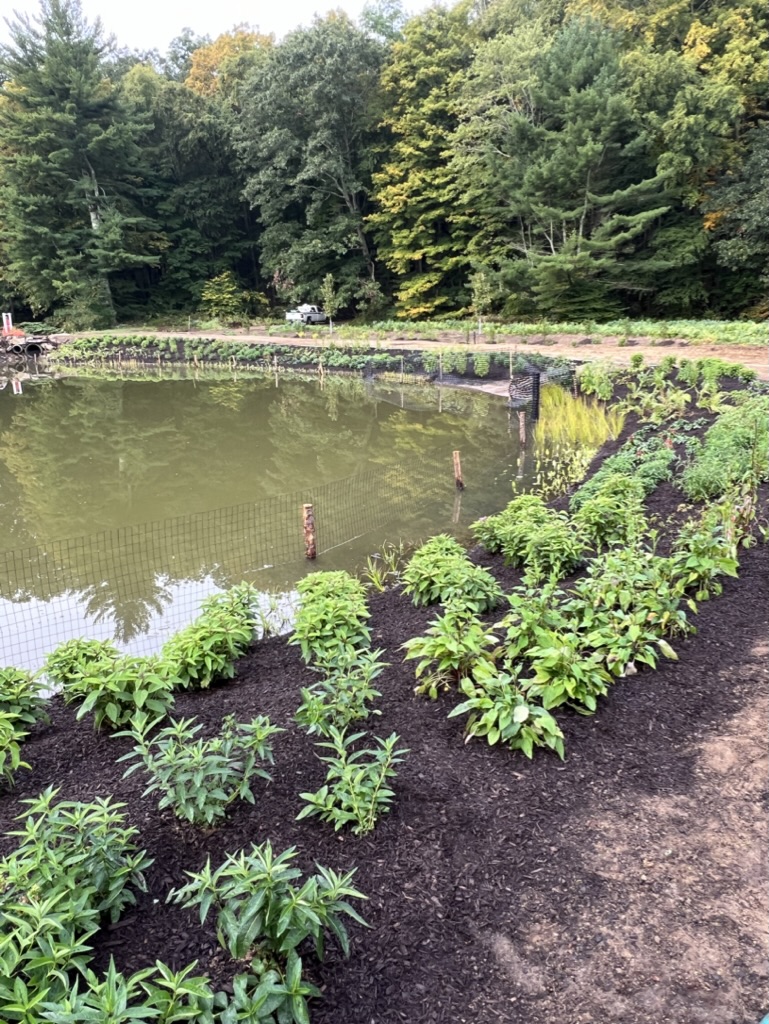
PLEASE NOTE THAT PHASE II WILL COMMENCE IN SUMMER 2026
- A bridge over the stream at the southern end of the pond
- A large box culvert will be included under the bridge to facilitate the flow of water–especially during storm surges
- A bird blind on the northeast corner for birders to enjoyOur pond has been cleaned and reconfigured to its original depth
WHY HELP TO RENEW OUR "NEW POND" AND MARSH?
- A renewed and functioning wetland system will once again serve as a natural filter for waters flowing through the watershed and into the Saugatuck River.
- Our wetlands are one of our most vital outdoor classrooms. Our hands-on field trips are shared with 5,000 children a year, bringing their school curriculum to life as they make discoveries in the natural world. At least 1,500 of these students focus on wildlife habitats and learn about their importance.
SOURCES OF FUNDING
As a non-profit 501(c)(3) organization, we are the grateful recipients of ARPA Funding from the Town of Redding. The $200,000 of American Rescue Plan Act funds provided us with the essential financial foundation for this project, which will cost over $500,000. Although significant commitments from generous Education Center donors, and planned-for grant proposals, will help us to reach our goal for this important project-there is always more to be done in terms of funding and we would love your help!
SOLAR
Sunlight to electricity—it’s that simple. Photovoltaic solar panels convert sunlight into clean energy with no moving parts and no emissions. As solar technology becomes more affordable, its benefits continue to grow.
In alignment with New Pond Farm’s mission to inspire stewardship through conservation and sustainable farming, the Board of Directors chose to meet a portion of the farm’s energy needs through a photovoltaic solar system.
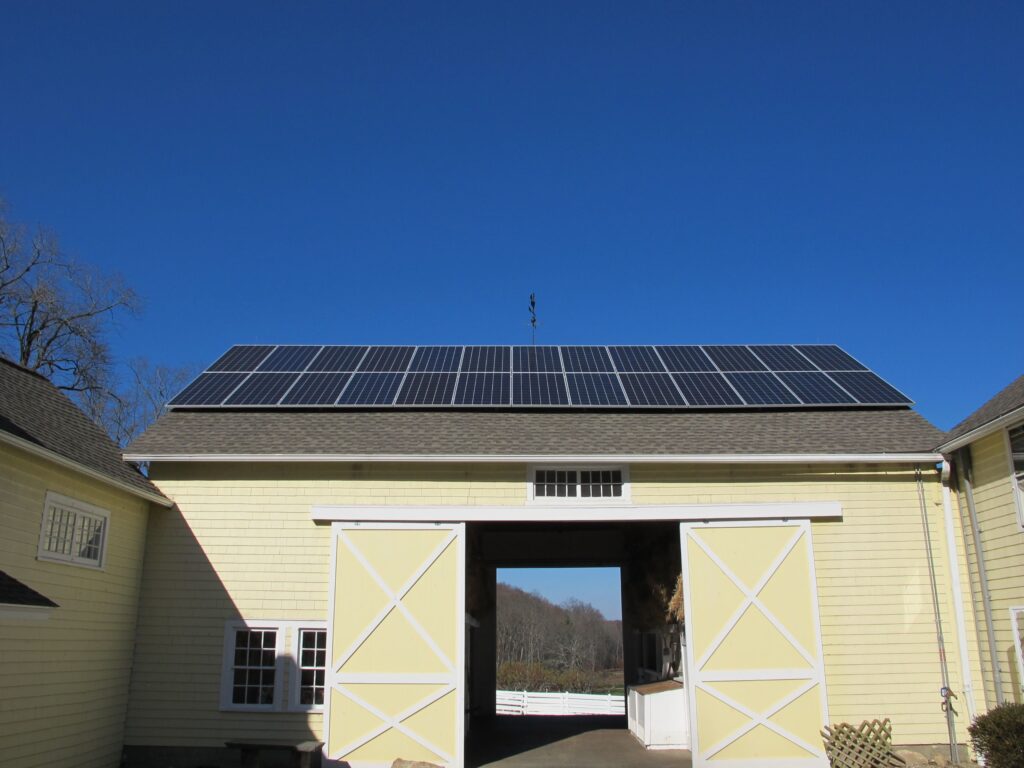
Completed in October 2014, the system has reduced both electrical costs and New Pond Farm’s carbon footprint. The Board believes solar energy is a responsible and practical use of technology in support of the farm’s mission—and a model worth considering wherever there is strong access to sunlight.
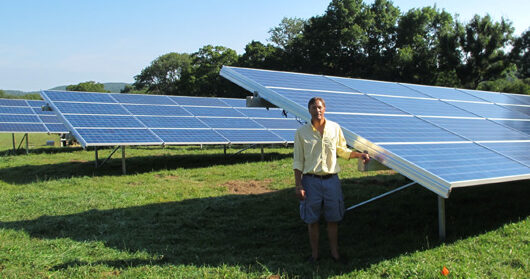
Ben Baker of Star Power, Project Underwriter
Over a decade ago, as global climate change was gaining wider attention, interest in solar photovoltaics grew as a clean, carbon-free energy source.
At the time, high costs limited adoption, but government incentives and early innovators helped shift the landscape. New business models—such as Power Purchase Agreements (PPAs), which allow organizations to host solar systems and purchase discounted electricity—made solar more accessible.
Nonprofits emerged as ideal partners for this approach. Unlike homeowners or small businesses, they tend to remain rooted in place, have strong community networks, and are deeply committed to environmental stewardship. Although nonprofits cannot directly benefit from tax credits, partnerships with solar developers made projects like this one possible—helping advance renewable energy while reducing long-term energy costs and environmental impact.
OUR WEATHER STATION
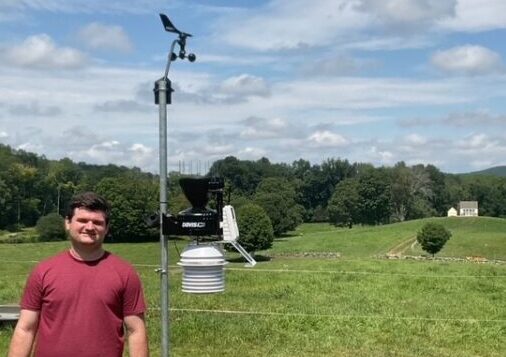
Our solar-powered Weather Station collects real-time and long-term data to support land stewardship, habitat monitoring, and agricultural planning. Visitors can also check the live feed to plan their visit. Located just west of the ground-mounted solar panels beyond the Farmhouse. Designed by New Pond Farm’s Science Committee and led by meteorologist Patrick Cahill.
