School Field Trips
Bring learning to life with a field trip to New Pond Farm Education Center!
Every year our experienced team of educators bring science, nature, and history to life for more than 5,000 students from area schools. Designed to complement your school’s curriculum, our engaging, hands-on programs keep students involved from beginning to end.
All programs are correlated to CT state standards and can be adapted to best fit the needs of your group.
New Pond Farm Education Center has an abundance of educational resources including:
The Property. 102-acres of rolling pastures, deciduous woodlands, native meadow, and vibrant wetland ecosystem with pond, stream, and vernal pools.
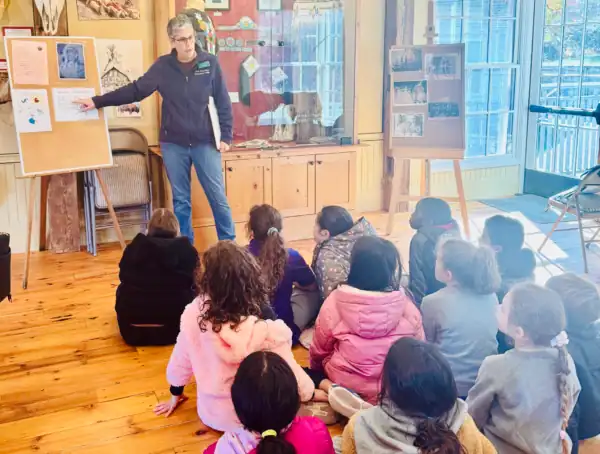
The Learning Center. Complete with a classroom, Native American museum, Wildlife Room, and restrooms.
The Farm. 19th-century barns, hay fields, pastures, and livestock including cows, sheep, chickens, pigs, and honeybees.
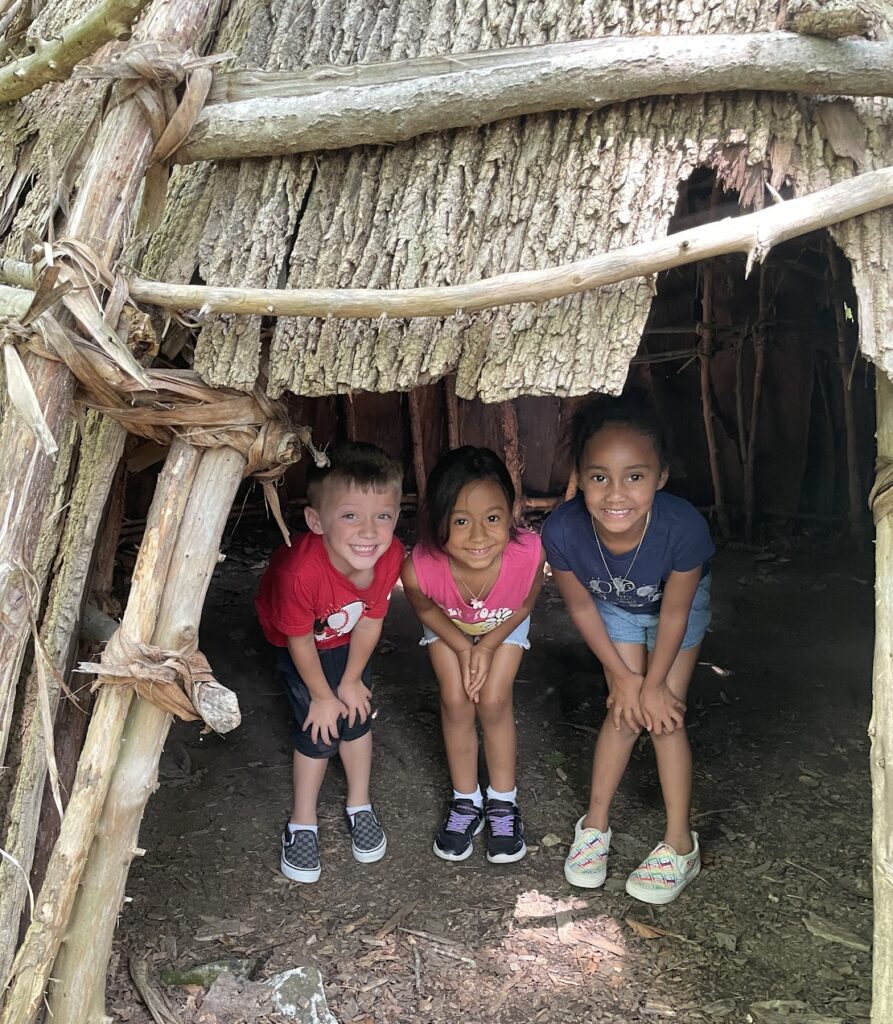
The Encampment. An authentically created Native American Woodland encampment with thatched longhouse, barked wigwam, smoking rack, fire circle, and more.
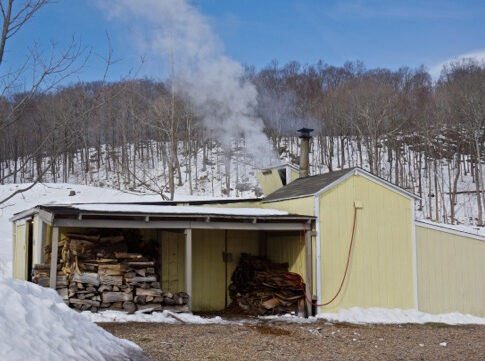
The Sugar House. Operational during the late winter/early spring, sap is boiled down into maple syrup in our wood-fired evaporator.
The Observatory. Situated on a small hill with multiple high-powered scopes, visitors get an expansive view of the night sky while observing celestial objects up close.
Streamside Picnic Area. For groups that want to extend their visit and enjoy more time outdoors.
SCHOOL FIELD TRIP OFFERINGS
*All programs are 90 minutes in length
*All programs offered year round unless otherwise noted
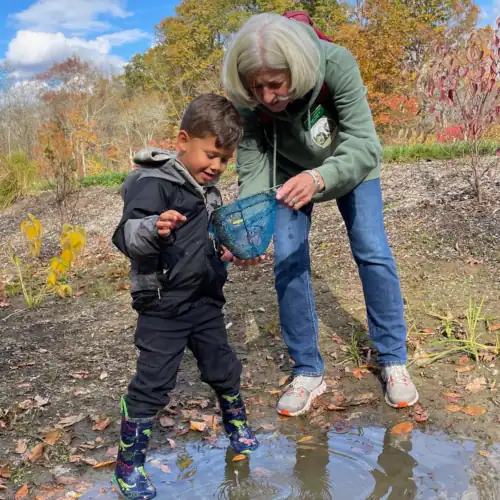
Adaptations
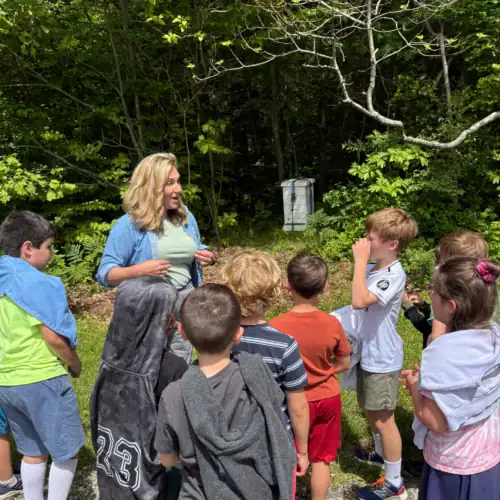
This interactive program gives students an opportunity to get a close-up look at claws, talons, beaks, eyes, ears, noses, and more. Through the use of live animals, mounted specimens, a walk through different habitats, and hands-on experiments students will see first hand why animals and plants look and behave the way they do.
Want to focus on a specific animal, plant, behavior, or trait? Our education team is available to help customize this program to best fit the needs of your students.
NG Science Standards
Grade K: LS1-1, ESS3-1
Grade 1: LS1-1
Grade 2: LS4-1
Grade 3: LS4-2, LS4-3, LS4-4
Grade 4: LS1-1, LS1-2
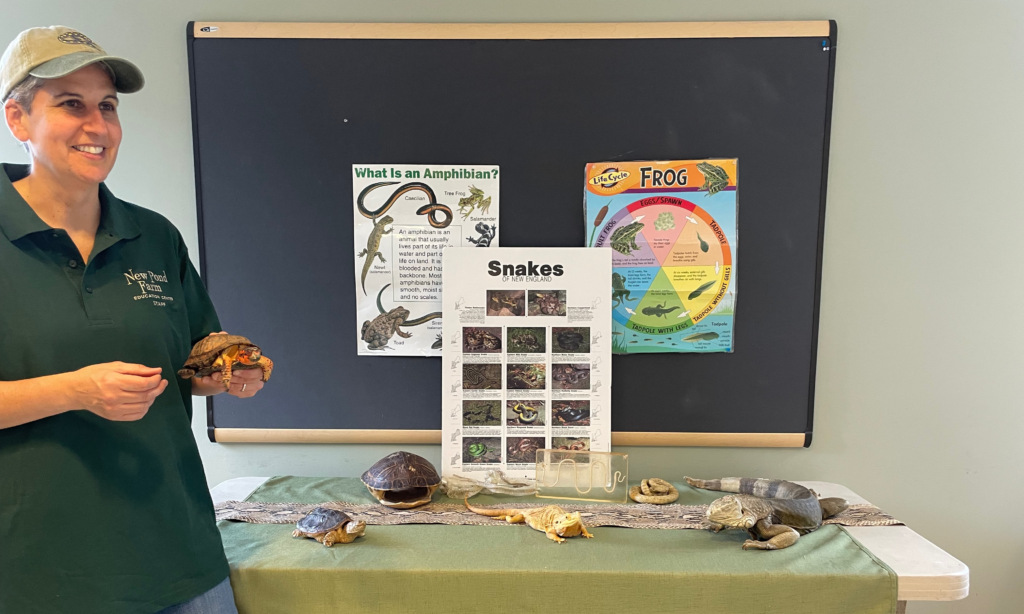
Connecticut's Indigenous People: From Past to Present
Designed for grades 3+
Students will go on a walk through time from the end of the last ice age to the present day.
We will cover everything from how Connecticut’s indigenous people met their basic needs in a changing natural landscape, to how tribal communities formed and governed, to the significance and importance of different cultural traditions.
Students will visit our authentically recreated encampment complete with thatched longhouse and barked wigwam and activity areas to immerse themselves in the daily life of the woodland time period.
They will hike through the forest and see firsthand how the natural environment shapes a community’s identity and way of life. Everyone will visit our museum to learn how indigenous people are working to preserve their culture since European contact.
CT Social Studies Standards
Grade 3: Civ.6.b, His.2.a, His.2.b, Geo.4.b, Geo.6.a
Grade 4: Geo.2.a, Geo.5.a, Geo.7.a, Geo.8.a, Geo.5.b
Grade 5:.His.14.a, Geo.8.a, His.14.b, Geo.4.a
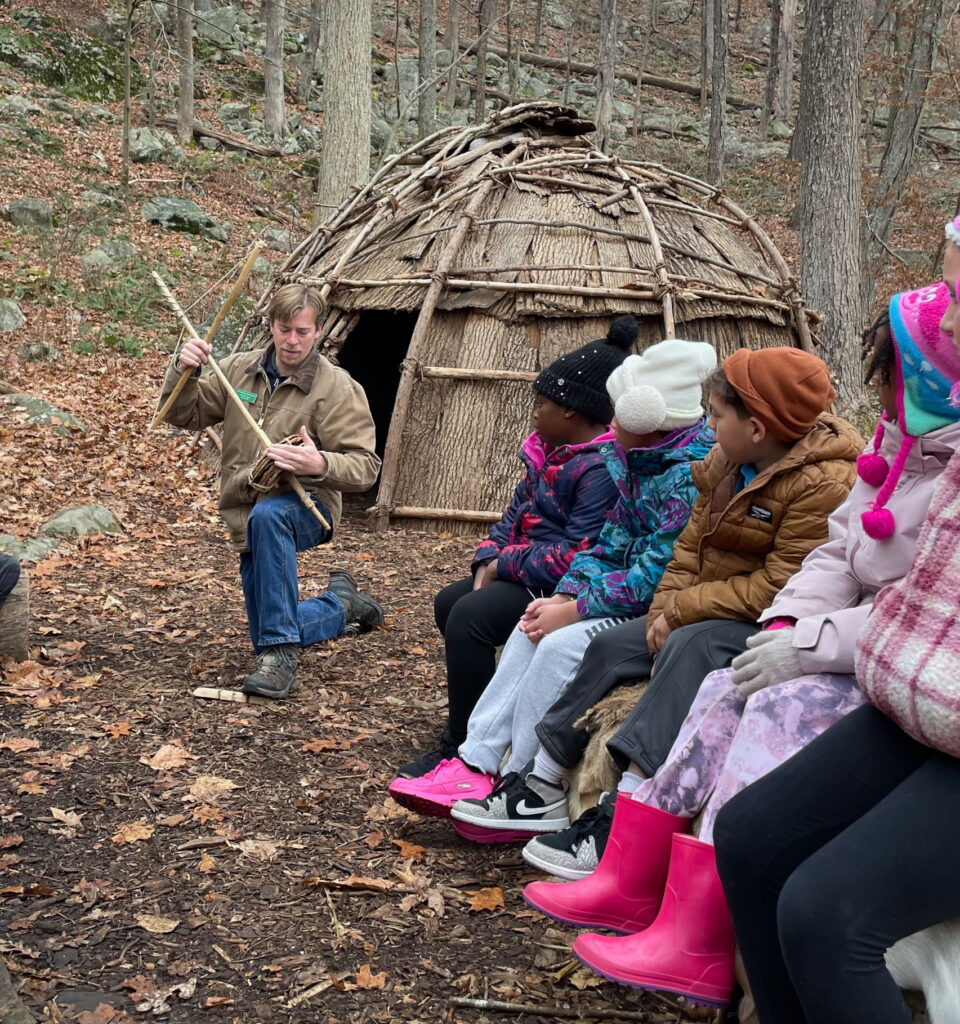
Erosion
Designed for grades 4+
This interactive program offers students the opportunity to witness the dramatic effects of glaciation and erosion over time by visiting geologically significant locations on the property and participating in a hands-on lab activity.
With an emphasis on the power of water students will observe firsthand the impact water has on the landscape and then brainstorm and test ways to manage runoff from heavy rains.
NG Science Standards
Grade 4: ESS1-1, ESS2-1, ESS3-2
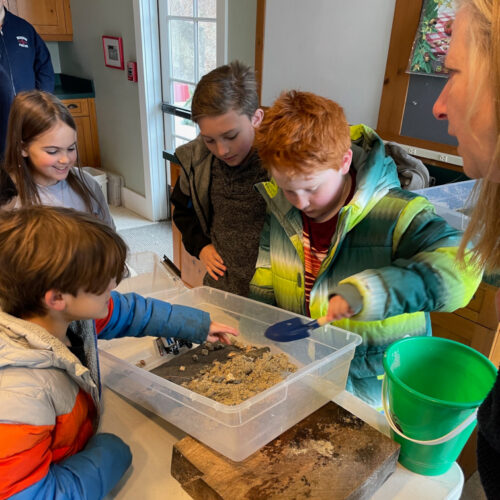
Farm Experience, with a focus on Fiber or Honeybees
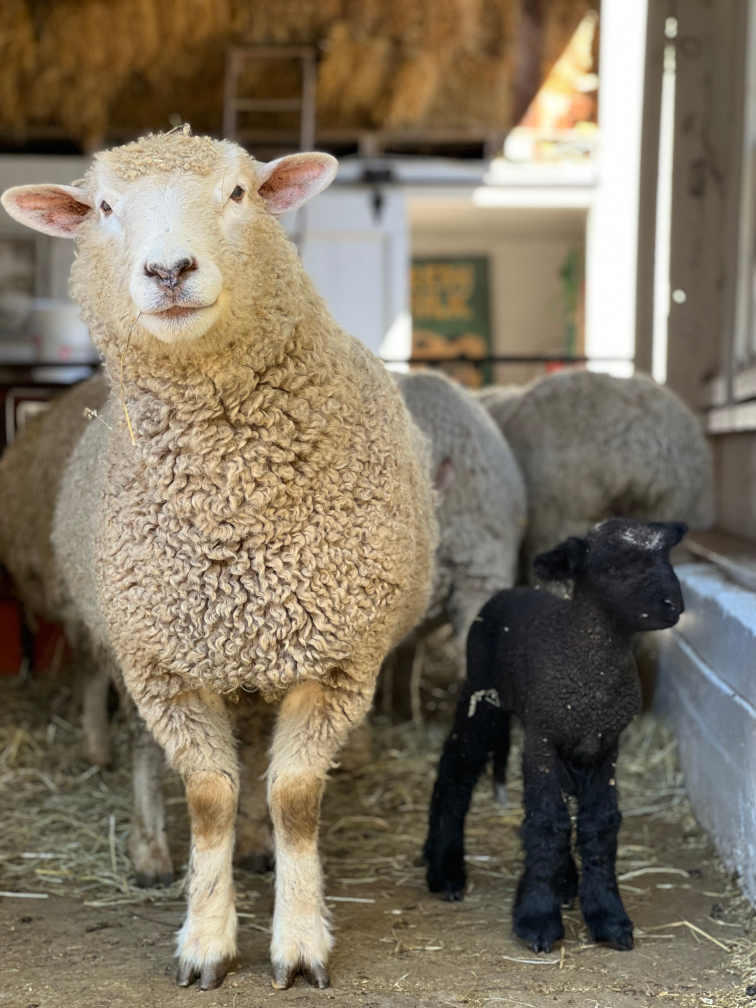
Students get an up-close look at life on a working farm during this engaging and educational program for all grade levels. The tour includes a visit to our historic 19th century barn to meet our resident dairy cows and learn the milking process – from grass to glass. We will visit the chicken coop and observe our flock of busy hens and walk through the pastures in search of our flock of Romney sheep. Depending on the season, we may also make stops at the pig pen or one of our beehives. Throughout the experience, students gain a deeper understanding of animal care, food systems, and the important role farms play in our communities.
Fiber Focus: Students work directly with our sheep’s fleece – feeling the water-resistent lanolin, washing it to remove the oils, and hand-carding/combing.
Honeybee Focus: Using our indoor observation hive, beekeeping equipment, photographs, and other props, students will learn the vital roles honeybees play on a farm – from pollinating plants to making honey. All participants will have the opportunity to taste honey and make a small beeswax candle.
NG Science Standards
Grade K: LS1-1, ESS2-2, ESS3-1, ESS3-3
Grade 1: LS1-2, LS3-1, ESS1-2
Grade 2: LS4-1
Grade 3: LS1-1, LS2-1, LS3-1
Grade 4: LS1-1
Grade 5: PS3-1
Freshwater Exploration
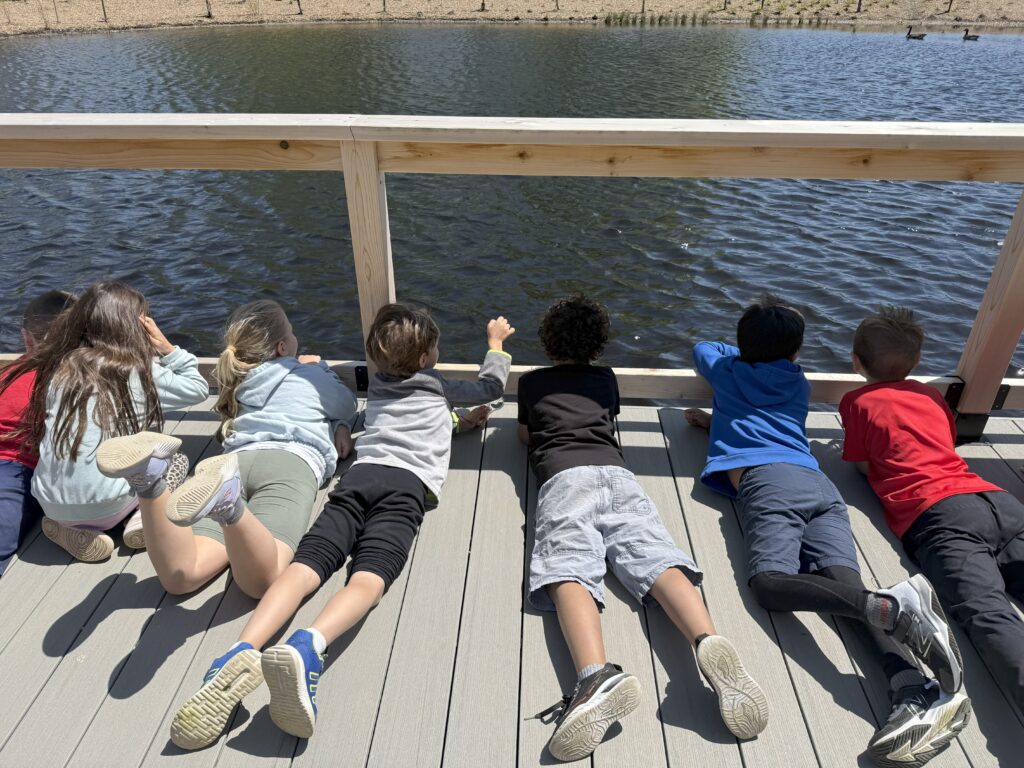
Students will explore the vibrant and diverse wetland habitats found at New Pond Farm including a stream, pond, marsh, and vernal pool. Each offers something unique, giving curious learners the opportunity to compare different habitats and discover what makes wetlands critical to the health of an ecosystem.
At the stream, students will use collection tools to gently catch and observe a variety of animal life including aquatic insect larvae, minnows, salamanders, and crayfish. At the pond they will get hands-on with a native aquatic turtle and learn about the important role wetlands play for many bird species. As they explore the diverse flora and fauna of wetlands, students will learn their many adaptations and survival strategies that help them thrive in their unique environments.
NG Science Standards
Grade K: LS1-1, ESS3-1
Grade 1: LS3-1
Grade 2: LS4-1, ESS2-2.
Grade 3: LS2-1, LS4-3, LS4-4
Grade 4: LS1-1
Habitat Hunt
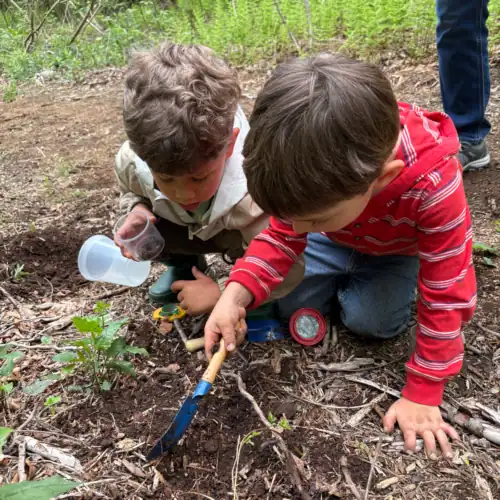
This immersive, hands-on program invites students to explore and compare a variety of local habitats including woodlands, streams, ponds, pastures, and meadows. We will investigate how each habitat functions as a community and observe firsthand how plants and animals depend on one another for survival.
As they explore food chains and adaptations, students will learn what makes each habitat unique. Students might overturn rotting logs in the woodlands to reveal the busy world beneath their feet. At the stream’s edge they may search for life tucked away from the swift current. Out in the pasture or in the meadow, students will learn how energy flows from sun to plant to animal up the food chain, and work together to catch a variety of creatures that seek shelter in these sunny habitats.2
NG Science Standards
Grade K: ESS3-1,LS1-1
Grade 1: LS3-1
Grade 2: LS4-1
Grade 3: LS2-1, LS4-3, LS4-4
Grade 4: LS1-1, LS1-2
Insects
Insects make up the largest class of animals on Earth and can be found on every continent and in every habitat. Students will get hands-on with a variety of insects as they come to understand the critical role they play in many ecological processes including pollination and nutrient cycling.
Students will meet ambassador insects and then head out into the field in search of native insects and other invertebrates in the meadow and pasture. They will also investigate flowering plants and their anatomy to more fully understand the process of pollination.
NG Science Standards
Grade 1: LS1-1, LS1-1, LS1-3
Grade 2: LS2-2, LS4-1
Grade 3: LS1-1, LS2-1
Grade 4: LS1-1
Maple Sugaring
(Offered mid-February – mid-March)
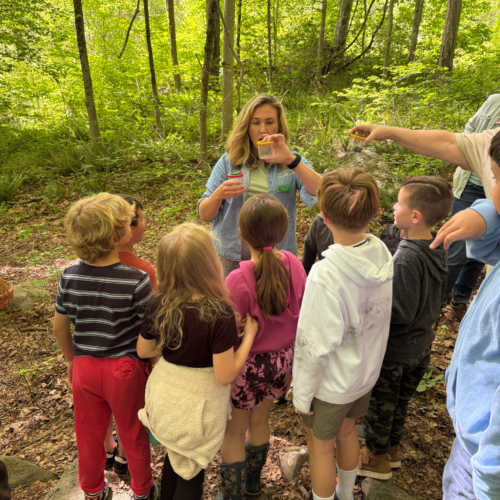
Students will experience a New England tradition during this sweet, late-winter program that begins with tree identification and learning about the seasonal cycles that cause trees to produce and move sap. Students will visit our authentically recreated Native American encampment to learn about traditional ways of collecting and cooking sap and enjoy a taste of maple syrup on top of a piece of freshly-baked cornbread. Students will also visit New Pond Farm’s Sugar House to see a wood-fired evaporator in action and compare more modern methods of maple sugaring.
NGSS Content Standards
Grade K: LS1-1
Grade 1: LS
Grade 2: LS2-1
Grade 3: LS1-1
Grade 4: LS1-1
Grade 5: PS1-3, PS3-1
CT Social Studies Standards
Grade K: K.Eco.3.a, 4.a, His.2.a
Grade 1:Eco.4.a, Geo.4.a, 6.a
Grade 2: Geo.4.a
Grade 3: Geo.4.a, 6.a, 8.a, His. 2.a
Grade 4: Geo.5.b
Native Americans of the Eastern Woodlands
Designed for grades K-2
With a focus on the indigenous people in Connecticut during the Eastern Woodland period, this program immerses students in traditional ways of life and daily activities. While visiting our authentically recreated encampment with thatched longhouse and barked wigwam, students will learn about the roles of each family member and also have the opportunity to try simple chores like grinding corn and scraping furs. We will
learn about foraging, horticulture and try a few familiar foods that people have been eating for thousands of years. This program includes a visit to our museum where students can see and touch recreated artifacts that were used for hunting, fishing, cooking, fire-building, and more.
NG Science Standards
Grade K – 3: ETS1-1
CT Social Studies Standards
Grade K: His.2.a, His.9.a
Grade 1: 1.His.9.a, Geo.5.a, Geo.6.a, Geo.4.a
Grade 2: Civ.6.a, His.4.a, 2.Geo.4.a
Grade 3: 3.Civ.6.b, 3.His.2.b